


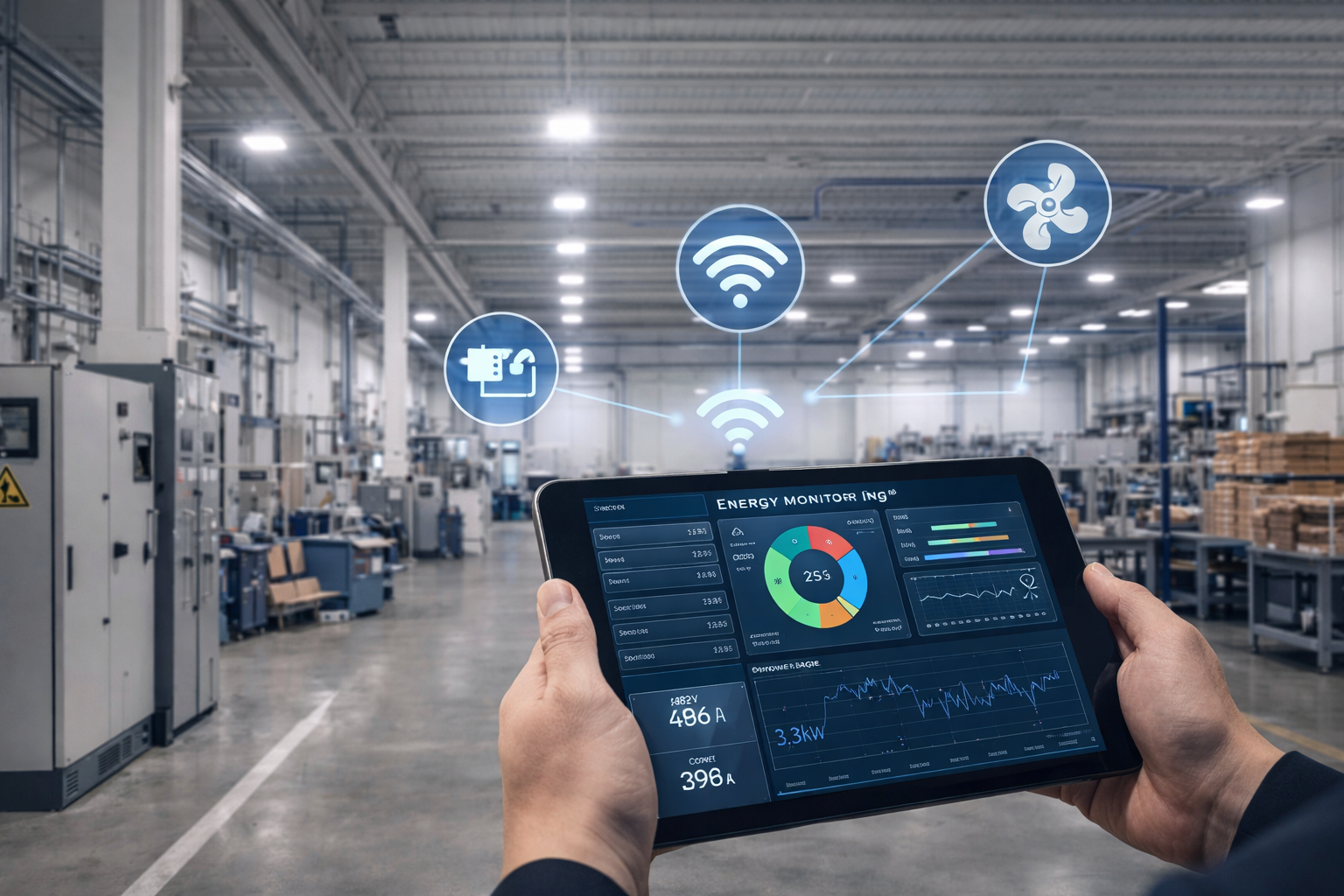
Modern facilities generate energy consumption data across multiple systems, but this information often remains scattered. HVAC equipment, electrical loads, and lighting operate independently, making it difficult to understand overall energy performance.
This article discusses the practical applications of IoT energy monitoring solutions in industrial and commercial facilities. It explains how connected sensors collect usage data, how IoT-based energy monitoring reveals inefficiencies, and how centralized visibility helps reduce operational costs.
What Are IoT Energy Monitoring Solutions?
IoT-based energy monitoring platforms use connected sensors to collect energy and operational data across facility systems. These sensors track electrical use, HVAC systems, temperature, humidity, occupancy and more. SiteWorx IoT energy monitoring solutions centralize this data into a single platform, giving facilities a unified view across systems.
An IoT-based lighting system includes connected fixtures and sensors that monitor lighting usage and respond to occupancy. The same occupancy information used for lighting adjustments can also support broader facility control, and leveraged for energy savings.
Data collected from sensors is displayed in simple dashboards, allowing facility teams to see usage patterns without relying solely on monthly utility bills. Through the SiteWorx platform, facility teams can review consumption trends across buildings or multiple locations worldwide from one centralized dashboard.
Why Modern Facilities Need IoT-Based Energy Monitoring
Energy monitoring using IoT provides continuous visibility into energy use across a facility.
Instead of manually collecting readings or reviewing isolated reports, facilities can view consumption trends in real time. Connected systems help identify when equipment runs longer than necessary or when lighting is left on in low-activity areas. SiteWorx enables this continuous visibility without requiring manual reporting or disconnected monitoring tools.
For organizations managing multiple buildings, centralized dashboards provide a single place to review performance across locations.
Practical Use Cases of Energy Monitoring IoT Solutions
Warehousing and Distribution
Large warehouses use IoT lighting control to manage lighting across aisles and loading areas. Sensors track occupancy and adjust lighting levels accordingly. HVAC monitoring helps identify areas that may be conditioned during vacant periods.
Manufacturing Operations
Production facilities use IoT energy-monitoring tools to observe how equipment consumes power during active and idle periods. This visibility helps teams understand usage patterns and identify opportunities for improvement.
Food Processing and Cold Storage
Facilities that depend on stable temperatures use IoT sensors to track refrigeration performance and environmental conditions. Continuous monitoring supports both operational reliability and energy awareness.
Multi-Site Portfolio Management
Organizations operating multiple locations use IoT-based energy monitoring to compare performance across sites. Centralized dashboards allow managers to view trends and identify facilities with higher consumption patterns.
Across these environments, SiteWorx integrates IoT-based energy monitoring with lighting, HVAC, and environmental data to support coordinated facility oversight.
What to Look for in an Energy Monitoring IoT Platform
Scalability
The platform should support tens of thousands of sensors and hundreds of global facilities as operations expand.
Ease of Installation
Wireless connectivity simplifies deployment and reduces installation costs.
Integration
An effective solution works alongside existing systems such as lighting controls and building management platforms. Data from an IoT-based lighting system can contribute to broader energy visibility.
Alerts and Notifications
The platform should notify facility teams when consumption exceeds expected levels, allowing a timely response.
How Energy Monitoring Fits Into a Broader Facility Intelligence Strategy
Energy monitoring is one part of a larger facility management approach. The same infrastructure used for IoT energy monitoring can support lighting control, environmental tracking, and space utilization analysis.
For example, sensors used in IoT lighting control provide occupancy data that can help align HVAC operation with real space usage.
Centralized visibility across systems allows organizations to make informed decisions that improve efficiency without increasing operational complexity. Within the SiteWorx ecosystem, this centralized visibility connects occupancy, environmental conditions, and energy performance into a cohesive facility intelligence framework.
Conclusion
IoT energy monitoring solutions provide facilities with clear visibility into consumption across HVAC, lighting, electrical systems, as well as environmental conditions. Through energy monitoring using IoT, organizations gain practical insight into how energy is used across single facilities or multiple locations.
By using connected systems such as an IoT-based lighting system and centralized monitoring tools, facilities can identify inefficiencies, improve operational awareness, and reduce overall energy costs. Explore IoT-based energy monitoring solutions at SiteWorx. For more information, contact us today!